
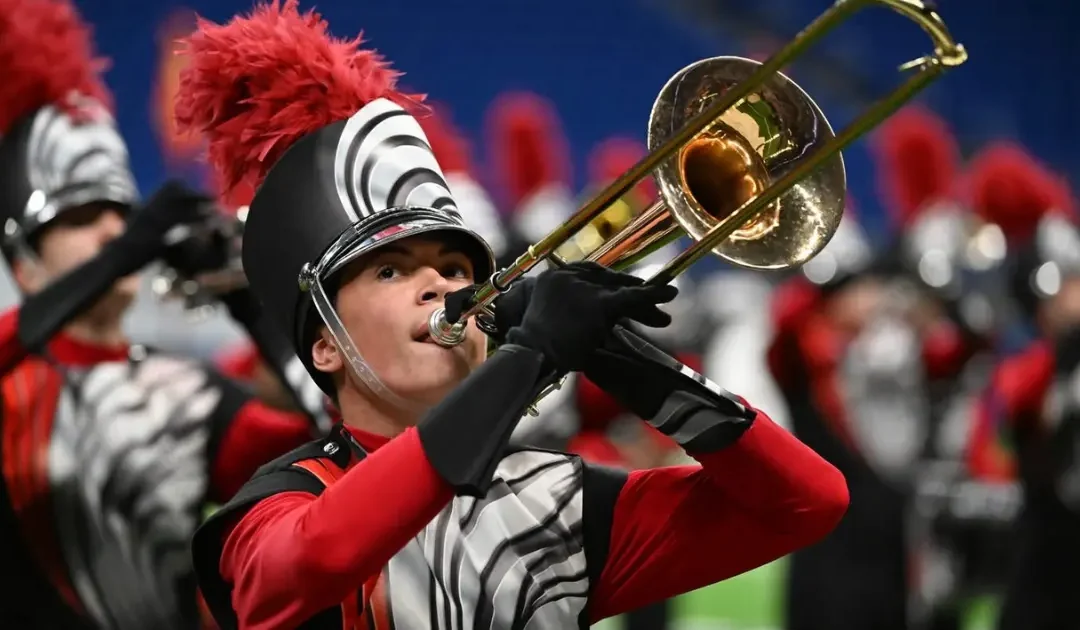
Marching band show design sits at the intersection of precision and artistry. A great show isn’t only drill, music, and props. Instead, it’s an immersive experience that tells a story, moves an audience emotionally, and leaves a lasting impact on performers and viewers alike.
This marching band show design guide walks you step by step through designing a show that works, from concept development and music selection to visual design, costuming, rehearsal strategy, and continuous improvement. You’ll come away with a real framework for building your ensemble’s next performance.
Whether you’re a director, designer, or educator, these strategies can help you create shows that captivate audiences, challenge students, and stand out in competition.
The Art of Storytelling in Marching Band Shows
Why Storytelling Matters
Every successful marching band show starts with a strong narrative framework. Storytelling is the thread that connects music, visuals, and emotion into one cohesive whole. Without it, even technically strong performances risk feeling disjointed or forgettable.
Think of your show as a movie on the field. The audience should be drawn in during the opening, carried through a sequence of emotional highs and lows, and left with a powerful closing image, the same idea behind 7 creative marching band show ideas for 2026, turning story into sound.
Crafting Engaging Narratives
When choosing your narrative, consider:
- Audience resonance: What will connect emotionally with both the crowd and judges?
- Relevance to performers: Will students feel invested in the story they are telling?
- Clarity of theme: Can the storyline be communicated without explanation, through music and visuals alone?
Examples of strong narrative directions include:
- Historical themes: “The Harlem Renaissance,” “The Space Race,” or “World War II Letters”
- Abstract concepts: “Dreams vs. Reality,” “Time,” or “The Elements”
- Pop culture influences: Inspired by film, literature, or visual art
- Original stories: Designed specifically for your ensemble’s identity
Musical Selection: The Heart of the Show
Aligning Music with Narrative
Music is the soul of a marching band show, the same principle behind how to craft effective, educationally-sound marching band music. Each piece must reinforce the narrative and create emotional continuity, so transitions between selections should feel natural and intentional, not forced.
When selecting music:
- Choose a variety of tempos and styles to maintain audience interest.
- Consider contrasting moods (lyrical vs. aggressive, bright vs. dark).
- Balance familiar material with fresh or original compositions.
Practical Considerations
- Licensing: Ensure you have the rights to use all copyrighted works.
- Student ability: Select music that challenges but does not overwhelm your ensemble.
- Instrumentation: Arrange to highlight your program’s strengths (e.g., a strong low brass section or outstanding percussion).
Choreography and Visual Design
Precision and Synchronization
The hallmark of great marching band shows is precision. So, every step, every horn angle, and every form change should be executed with clarity. Achieving this requires:
- Clear drill writing tailored to your band’s size and ability.
- Repetition and sectional rehearsals.
- A focus on uniformity of movement across the ensemble.
Beyond Traditional Drill
Don’t be afraid to move beyond traditional drill. Use:
- Layering and depth: Overlapping forms create visual complexity.
- Asymmetry and organic forms: Breaking away from rigid symmetry can feel modern and engaging.
- Dynamic staging: Place soloists and small groups in visually striking positions.
- Transitions: Smoothly connect drill sets to maintain energy flow.
Tip: Consider using technology, like Pyware or EnVision, to visualize and refine design concepts, the same drill software I mention in 4 essential tips for teaching marching band drill like a pro.
Costume and Visual Elements
Thematic Costuming
Uniforms are not just clothing. Instead, they’re part of the visual storytelling.
- Align costumes with the show’s theme or narrative.
- Incorporate color palettes that reinforce musical moods.
- Consider lightweight, flexible designs that allow for movement.
Props and Visual Effects
Props and effects can turn your show into a full spectacle. Ideas include:
- Thematic props: Ladders, scaffolding, or platforms to add verticality.
- Fabric effects: Flags, tarps, or ribbons that extend visual impact.
- Special effects: Smoke machines, LED lights, or projection (when permitted).
Caution: Props should always enhance the performance, never distract from it.
Rehearsal and Feedback
Rigorous Practice
A polished marching band show only emerges through consistent, structured rehearsals. Focus areas include:
- Fundamentals first: Breathing, posture, step size, and tone quality.
- Sectionals: Targeted rehearsal time for brass, woodwinds, percussion, and guard, the same structure I lay out in 13 proven ways to improve your marching band rehearsals.
- Full ensemble runs: Integrating music and movement repeatedly to build stamina.
Continuous Improvement
Above all, feedback is essential.
- Use video recordings of rehearsals and performances.
- Invite outside clinicians or adjudicators for fresh perspectives.
- Encourage peer feedback within sections.
Adopt John Wooden’s philosophy: “It’s what you learn after you know it all that counts.” Continuous improvement is what separates good ensembles from great ones.
Leadership and Culture
Student Leadership
Strong student leaders are the backbone of successful programs, the same idea behind building better bands through personal leadership. Train drum majors, section leaders, and captains to:
- Model positive rehearsal habits.
- Communicate effectively with peers.
- Provide encouragement and correction when needed.
Building Ensemble Culture
- Accountability: Every member plays and marches every rep.
- Collaboration: Encourage students to solve problems together.
- Respect: Build a culture where effort is valued as much as outcome.
Measuring Success
Instead, redefine success beyond trophies:
- Did students grow musically and personally?
- Did the ensemble build unity and resilience?
- Did the show impact the audience emotionally?
Competitions are important benchmarks, but the lasting success of a marching band show is measured in student growth and shared memories, the same lasting value I cover in 10 life-changing benefits of marching band.
Putting It All Together: Your Marching Band Show Design Guide
Designing marching band shows is both an art and a science. It requires balancing creative storytelling, precise execution, and strong leadership. By integrating thoughtful narratives, music selection, visual design, costuming, rehearsal discipline, and ensemble culture, you can craft performances that resonate deeply with audiences and inspire students for years to come.
In the end, the process matters as much as the final performance. So push boundaries, refine relentlessly, and remember that the greatest shows are those that transform both performers and spectators.
Frequently Asked Questions About Marching Band Shows
What makes a marching band show engaging?
An engaging show tells a clear story, uses strong music, and integrates visuals that keep the audience connected from start to finish.
How do I choose the right theme for a marching band show?
Pick a theme that resonates with both your students and your audience. Also consider emotional connection, musical variety, and visual storytelling potential.
What role does costuming play in marching band shows?
Costuming reinforces the narrative, establishes mood, and helps create a unified look that connects performers to the story being told.
Are props necessary for a successful marching band show?
Props can enhance a show but aren’t required. Instead, the story, music, and drill should always be strong enough to stand on their own.
How long should it take to design and rehearse a marching band show?
Most programs begin planning months in advance and rehearse consistently over 8 to 12 weeks. That early preparation ensures polish by performance season.
What is the biggest mistake directors make in show design?
Overcomplication. Trying to do too much musically or visually can overwhelm students and confuse the audience. Instead, simplicity with clarity is often more effective.
How can feedback improve a marching band show?
Video review, outside clinicians, and adjudicator commentary provide insights directors and students may miss. As a result, feedback ensures constant refinement.
About Evan VanDoren
Evan VanDoren is a composer, arranger, conductor, and former high school band director whose music is performed by ensembles across the United States and beyond. He works with band programs to create music and marching band productions designed around the strengths of their students and programs.
Recent Comments