
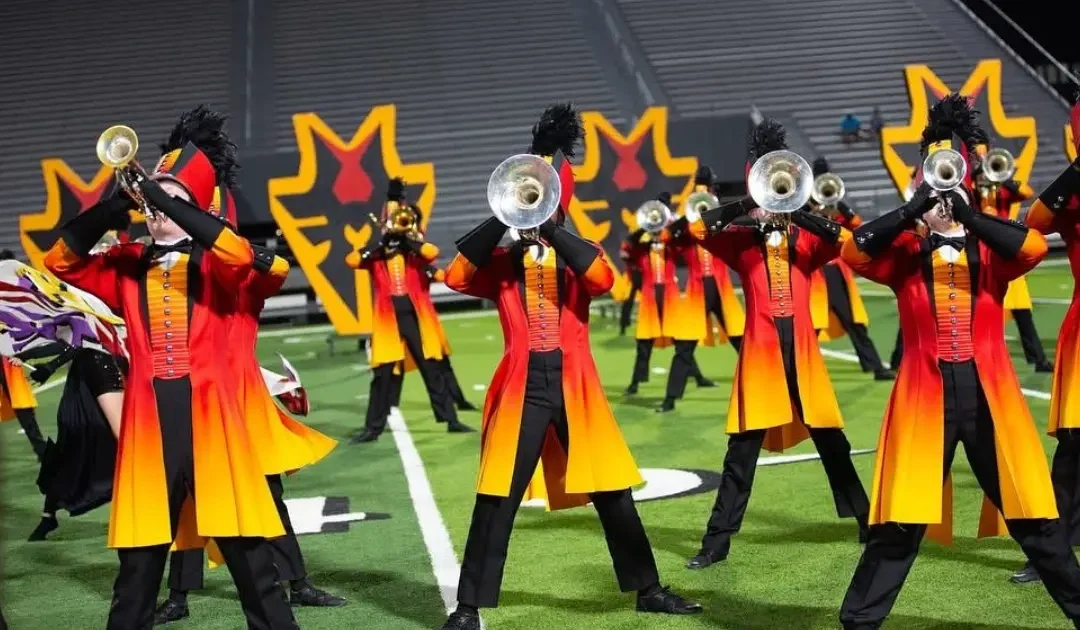
Marching band is one of the most visible programs in a school district. Instruments, uniforms, travel, and staff stipends appear clearly in the budget. When financial pressure hits, it’s often seen as an easy place to cut.
That visibility creates a misleading picture.
The true financial impact of marching band extends far beyond the music budget. It affects staffing, course offerings, and the long-term efficiency of the master schedule. In many cases, the real costs begin only after participation declines.
Why Marching Band Is Easy to Misjudge Financially
Marching band costs are tangible and easy to point to. What is harder to see is how these programs function inside the broader scheduling system of a school.
Most high school schedules are built around graduation requirements. Students must earn fine arts credits, and in many states, physical education credits as well.
When students enroll in marching band, those requirements are often met inside a single, efficiently staffed course. When they do not, districts still have to place those students somewhere else.
That difference matters financially.
How Marching Band Enrollment Affects Staffing
When students do not participate in band, schools frequently schedule them into introductory art or elective classes to meet graduation requirements.
As participation drops, districts often need to:
- Add additional elective sections
- Increase full-time equivalent staffing
- Absorb higher recurring salary and benefits costs
These staffing decisions tend to be permanent. Once a position is added, it rarely disappears the following year.
A small decline in marching band participation can quietly create long-term budget obligations that far exceed the program’s operating costs.
Scheduling Efficiency
Marching band is structurally efficient in ways few electives can match.
- Large enrollment in a single section
- Fine arts credit fulfilled
- In many states, physical education credit earned
- Minimal duplication of staffing
A marching band with 120 students does not require four times as much staff as a band with 30 students. Instruction scales efficiently.
When participation declines, that efficiency is lost. Students are spread across smaller classes that cost more per student to operate. From a scheduling perspective, these programs consolidate enrollment. Without it, districts fragment it.
The Staffing Ripple Effect
Lower marching band participation reshapes the master schedule.
Over time, districts may experience:
- More low-enrollment elective sections
- Increased staffing pressure across departments
- Reduced flexibility when enrollment shifts
- Higher long-term personnel costs
These costs do not always appear in the music budget, but they are real and recurring.
This is why cutting or weakening band programs rarely produces the savings districts expect.
Why Middle School Participation Matters
High school enrollment does not begin in ninth grade. It was built years ago.
Strong middle school programs create stable pipelines that allow districts to plan staffing efficiently. Weak middle school participation creates volatility that districts feel later, when staffing decisions are harder to reverse.
From a financial perspective, early music participation acts as prevention. It keeps students focused in efficient ensemble courses rather than spreading them across additional electives.
Marching Band as a Long-Term Financial Asset
When districts view band programs only as an expense, they miss their systemic value.
Healthy programs help districts:
- Meet graduation requirements efficiently
- Limit the need for additional elective staff
- Maintain stable student-to-teacher ratios
- Preserve flexibility in the master schedule
Marching band is not just an arts program. It is a structural asset that supports the entire school schedule.
Reframing Budget Conversations
Advocacy conversations often focus on culture and student growth. Those arguments matter, but financial framing carries weight with administrators and school boards.
When discussing marching band, it helps to frame it as:
- A scheduling efficiency tool
- A way to limit long-term staffing growth
- A program that fulfills multiple graduation requirements
- A stabilizing force in the master schedule
This reframing often shifts the question from “Can we afford this?” to “What does it cost us if we lose it?”
Participation Stability in Competitive Programs
Programs involved in Bands of America or UIL often maintain higher participation over time.
That stability reinforces scheduling efficiency and protects staffing levels year after year. While competition is not the goal everywhere, consistent participation is.
Program Quality Drives Participation
Scheduling efficiency only works if students choose to enroll.
Strong design, engaging repertoire, and a clear program identity are not just artistic decisions. They directly influence participation, which affects staffing and long-term financial outcomes.
Many directors maintain enrollment by investing in high-quality experiences, including custom marching band shows and program-specific design support.
Participation follows engagement.
Research Supports the Financial Impact of Music Programs
National research shows that music programs typically account for a small percentage of district operating budgets while serving large numbers of students.
Music education is rarely the financial burden it is perceived to be. In many cases, it prevents larger downstream costs tied to staffing and scheduling.
The Cost You Don’t See
Ultimately, the cost of marching band is visible.
The cost of not supporting marching band appears quietly in staffing charts, master schedules, and long-term budget commitments.
Districts that take a long view protect participation early and invest in program quality. They recognize marching band as part of the district’s infrastructure, not an optional add-on.
Final Thought
Marching band is easy to cut and difficult to rebuild.
Once participation declines, the financial consequences ripple outward and compound over time. Districts that understand this do not ask whether marching band is affordable.
They ask what it protects.
Frequently Asked Questions
Is marching band expensive for school districts?
Marching band has operating costs, but declining participation often leads to higher long-term staffing expenses that exceed those costs.
How does marching band help with graduation requirements?
Marching band typically fulfills fine arts credit and, in many states, physical education credit, reducing the need for additional elective courses.
Why does marching band participation affect staffing?
Lower participation forces districts to add elective sections elsewhere, often requiring additional staff.
Do competitive marching band programs change the financial picture?
Programs involved in UIL or Bands of America often maintain higher participation, which improves scheduling stability and staffing efficiency.
How can directors use this information for advocacy?
Enrollment data, staffing projections, and alignment with graduation requirements help frame marching band as a financial and scheduling asset.
Recent Comments