
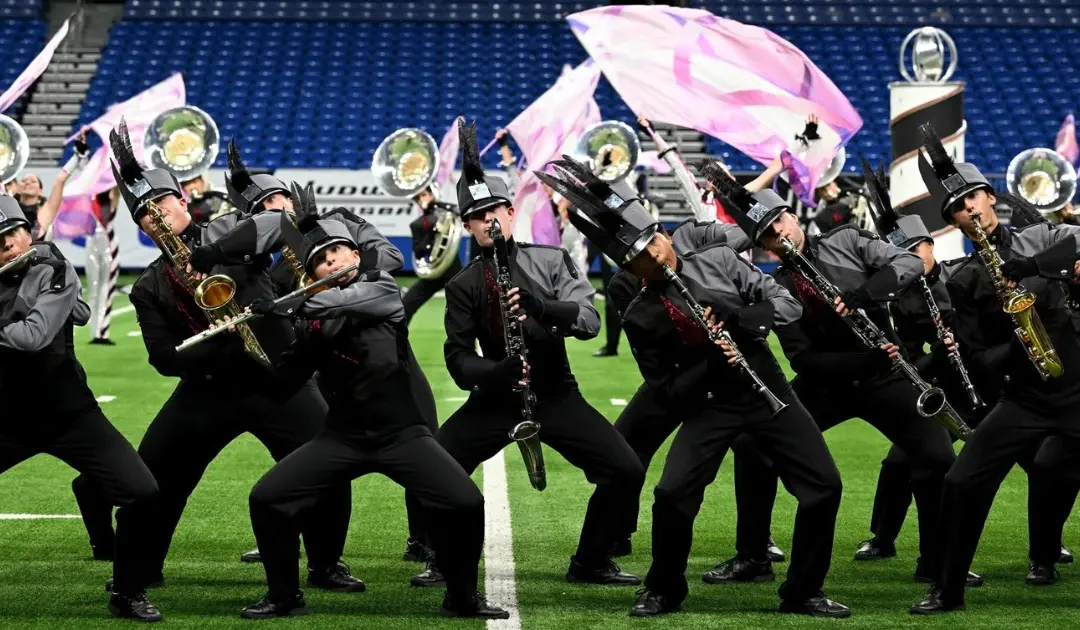
Every season, directors pour their hearts into creating marching band shows that tell a story, connect with audiences, and impress the judges. By the time your UIL Area marching band show rolls around, most bands have learned the drill and the notes. So what separates a good performance from a memorable one?
Here are ten strategies to sharpen your marching band show in the final weeks before competition day.
1. Know Exactly What Judges Are Looking For
Before you fine-tune your performance, study how UIL evaluates marching band shows. The three core captions, music performance, visual performance, and general effect, each tell a different story.
- Music: tone quality, blend, intonation, rhythmic clarity.
- Visual: posture, alignment, and clarity of movement.
- Effect: pacing, emotional connection, and coordination between music and drill.
Review the UIL Marching Band Handbook and rank your program’s strengths. That way, you’ll know exactly where to focus your rehearsals.
2. Set One Clear Goal for Every Rehearsal
The best marching band shows aren’t built by running the entire production over and over. Instead, they’re refined through focused, intentional work, and each rehearsal should have one specific objective:
- “Clean drill transitions in Part 2.”
- “Lock in balance between front ensemble and brass.”
- “Shape phrasing in the ballad.”
First, write it on the board. Then say it out loud, and track progress. When every minute has a purpose, your band will grow faster than programs that simply “run the show again.”
3. Revisit Fundamentals Every Day
Even elite UIL marching band shows can fall apart if basic fundamentals slip, so dedicate time every day to the basics, the same daily habits I break down in breathe like a pro: mastering stagger-breathing in marching bands:
- Long tones for tone consistency
- Balance and tuning across the ensemble
- Rhythmic precision and subdivision
- Consistent articulation and release
As a result, clean fundamentals make a big show feel effortless, and the audience, and the judges, can always tell.
4. Clean the Visuals Until They Shine
No matter how strong your music is, visual clarity can make or break a marching band show. That’s because judges reward bands that look intentional, confident, and unified. Focus on:
- Posture and body carriage
- Consistent horn angles
- Step size and timing
- Smooth transitions between sets
A show that moves together reads stronger from the box, even if the drill itself isn’t overly complex, the same idea behind 4 essential tips for teaching marching band drill like a pro.
5. Structure Rehearsals Like a Championship Program
Winning bands use structured, repeatable routines. Try this framework for your UIL marching band rehearsals:
- Warm-up (15 min): tone, time, tuning
- Sectionals (30–45 min): targeted problem-solving
- Full ensemble (45–60 min): integration and endurance
- Run & reflect (10–15 min): one complete performance plus feedback
In short, consistency in your structure builds consistency in performance.
6. Record, Watch, and Listen
One of the most underused tools in marching band show preparation is playback. In fact, recording every full run helps directors and students hear and see what’s actually happening.
- Audio playback exposes timing and balance issues.
- Video playback highlights spacing and body alignment.
- Peer review sessions help students own their growth.
So, schedule a “listen-only” day once a week, no playing, just analysis. It’s one of the fastest ways to get better.
7. Train the Mind Like You Train the Body
Great marching band shows aren’t just performed, they’re imagined long before the performance. Because of that, visualization and mental preparation are powerful tools for consistency under pressure. Encourage students to:
- Mentally walk through the entire show.
- Visualize entering the field, executing sets, and hearing the crowd.
- Use controlled breathing before each rep to stay calm and focused.
In other words, confidence is a rehearsal habit, not an accident.
8. Perfect the First Impression
In fact, UIL judges start evaluating your marching band show before the first note. Everything, from how the ensemble walks onto the field to how students carry themselves, sets a tone. Make sure your band:
- Enters with purpose
- Moves with consistency and control
- Demonstrates professional posture and poise
Together, small details like horn angle, step-off timing, and alignment send a powerful message: we’re ready.
9. Shift from Cleaning to Performing
Two weeks before the contest, it’s time to stop “fixing” and start performing, because this is when your marching band show transforms from clean to captivating.
- Rehearse in full uniform.
- Treat every run as a live performance.
- Focus on musical expression, not just accuracy.
After all, judges and audiences both respond to energy, confidence, and storytelling. Clean is the floor, connection is the ceiling.
10. Keep Perspective (and Enjoy the Moment)
When contest week arrives, above all, remember what your students have achieved. Marching band shows are about growth, musically, visually, and personally. UIL results matter, but they don’t define your program, a perspective echoed in what John Wooden can teach marching band programs. So, celebrate progress:
- Consistent improvement over the season
- Teamwork and discipline
- The pride of performing something bigger than yourself
If your students walk off the field proud and connected, you’ve already won.
Final Thoughts on Your UIL Area Marching Band Show
The most successful marching band shows are built on clarity, confidence, and consistency, not luck. So, prioritize focused goals, clean fundamentals, and intentional performance habits. When your students understand why they’re rehearsing a certain way, their energy shifts, and so does your entire show.
FAQ About Marching Band Shows
What makes a great marching band show?
A great marching band show combines clear musical execution, visual precision, and emotional storytelling. That’s because judges and audiences connect most with programs that sound balanced, look confident, and communicate a unified idea.
How do I design a marching band show that stands out at UIL?
Start with a strong concept that fits your ensemble’s strengths. Keep drill readable from the press box, choose music your students can perform confidently, and emphasize clarity over complexity. In the end, a well-rehearsed, achievable show always outperforms a messy one.
When should I start preparing my marching band show for UIL?
Many directors begin conceptual planning in winter or early spring. Drill writing and arranging typically start by late spring, with full ensemble rehearsals beginning in summer band camp. That early preparation allows time to refine before the UIL season begins.
What are the biggest mistakes bands make with their UIL marching band shows?
Common pitfalls include over-designing drill, under-rehearsing fundamentals, and neglecting timing between music and movement. As a result, simpler, well-executed ideas usually earn higher scores than ambitious but inconsistent ones.
Contest Day and Beyond
What’s the best way to clean drill and visuals before UIL competition?
Break transitions into small chunks, rehearse them with a metronome, and videotape from the press box. Focus on posture, timing, and alignment. That way, clean arrivals and departures between sets make the entire production look sharper.
How do I manage nerves on UIL contest day?
Simulate performance conditions during rehearsals, full uniform, props, electronics, and timing. Also, use breathing techniques and mental visualization to keep students calm and confident.
How can I make my marching band show more engaging for audiences?
Use dynamic pacing, clear visual focus points, and musical contrast. In particular, audiences love shows with emotional range, moments of intensity followed by moments of release.
Where can I find new marching band show ideas or music?
Explore EvanVanDoren.com/marchingbandshows for customizable, competition-ready shows written specifically for high school and collegiate ensembles.
About Evan VanDoren
Evan VanDoren is a composer, arranger, conductor, and former high school band director whose music is performed by ensembles across the United States and beyond. He works with band programs to create music and marching band productions designed around the strengths of their students and programs. Learn more at evanvandoren.com.
Recent Comments