
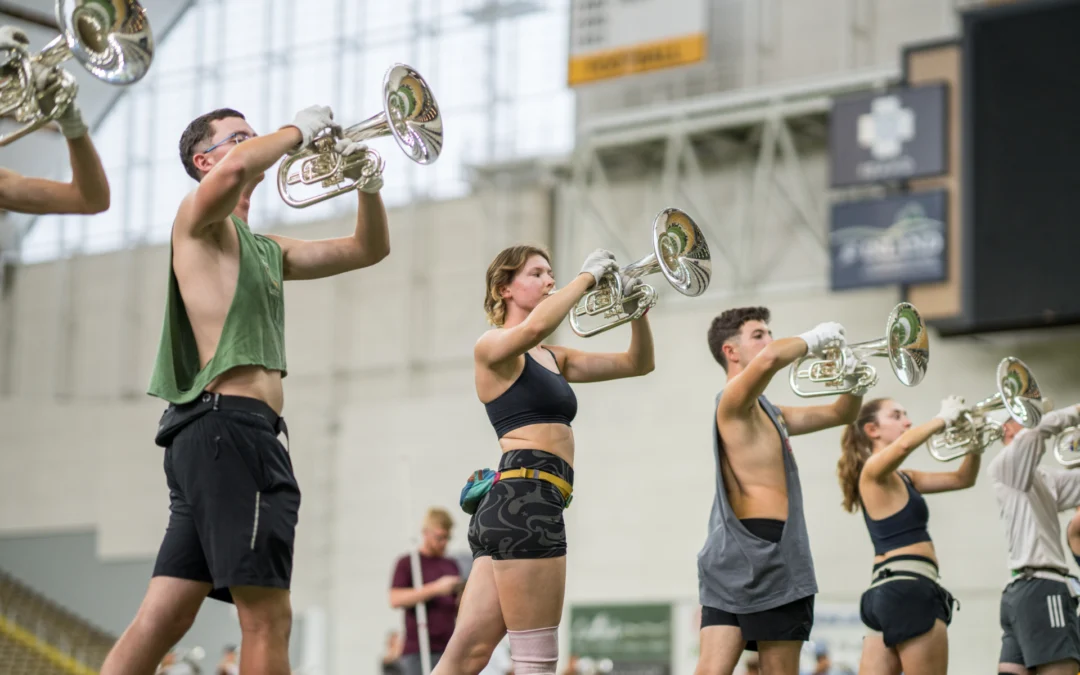
When people think of marching band shows, they picture the lights, the uniforms, and the roar of the crowd. But the real story happens behind the scenes — in the long rehearsals, shared laughs, and quiet moments when students learn what they’re capable of.
As a composer and former band director, I’ve seen it again and again: marching band builds people. The lessons learned on the field shape how students think, lead, and work with others long after the final show.
Discipline and Time Management
Every successful season starts with consistency. Hours of repetition and refinement teach students discipline — not because anyone forces it, but because excellence demands it.
Balancing school, family, and rehearsal schedules pushes them to plan ahead and manage time wisely. Those habits transfer far beyond music. They build the kind of focus that fuels success in college and careers.
When I design marching band shows, I’m always inspired by the dedication students show every single day. That persistence becomes part of who they are.
Teamwork and Collaboration
Marching band is one of the purest examples of teamwork you’ll find in education. Every performer depends on everyone else — whether it’s aligning visuals or blending musical phrases.
Students learn communication, compromise, and shared accountability. When something doesn’t go as planned, they problem-solve together, not alone. That kind of collaboration is priceless, both on the field and in life.
If you’re helping your students strengthen these foundations, check out the Fundamentals Packages for structured exercises that build ensemble unity and confidence.
Leadership and Responsibility
Every program needs leaders — section leaders, drum majors, student coordinators. These roles teach students to inspire rather than command, to model professionalism, and to lead by example.
They learn that leadership isn’t about power; it’s about service. The experience builds confidence, empathy, and decision-making skills that translate directly into the real world.
Adaptability and Resilience
No season goes perfectly. Weather changes, drill sets get rewritten, and equipment fails at the worst possible time.
Through it all, students learn how to remain calm, think critically, and adapt with purpose. Marching band teaches them that success isn’t avoiding challenges — it’s responding with flexibility and composure.
I’ve watched students overcome setbacks that would rattle most adults. Marching band teaches resilience you can’t fake.
Musical Growth and Expression
Marching band is one of the most demanding musical experiences a student can have. Performing complex music while executing precision drill requires focus, endurance, and artistry.
It deepens understanding of tone, rhythm, phrasing, and ensemble awareness. Students develop stronger ears and faster instincts — the kind of musicianship that strengthens every other ensemble, from concert to jazz.
If you’re selecting repertoire for your next season, explore New Marching Band Shows for 2026 to find inspiring, field-ready concepts for your group.
Diversity, Inclusivity, and Confidence
Marching bands bring together students from all walks of life. Differences in background, experience, and perspective become strengths. Within this shared purpose, students learn respect, empathy, and inclusivity.
Performing for large audiences builds confidence in a way few classrooms can. That sense of belonging — the feeling of being part of something bigger — stays with them forever.
Cognitive and Academic Benefits
Marching band challenges both the body and mind. Students memorize music, drill, and visual cues while reacting to real-time changes — sharpening memory, attention, and problem-solving skills.
That mental stamina often shows up in the classroom. Many band students report improved academic focus and study habits, especially during the busiest parts of the season.
A Lifelong Connection to Music
Ask any adult musician where it started, and many will point back to marching band. The friendships, the rush of performance, and the joy of creating something meaningful together — those experiences last.
Marching band doesn’t just build performers. It builds people who love music, value teamwork, and strive for excellence in everything they do.
Preparing Students for the Future
The skills developed through marching band — discipline, adaptability, teamwork, and leadership — form a foundation for success in any path students choose.
I’ve seen graduates go on to thrive as engineers, educators, doctors, and entrepreneurs. What they carry from marching band isn’t just musicianship — it’s mindset.
If you’re building a program that empowers students beyond performance, the Build Your Show tool can help you design the kind of experience that transforms both music and lives.
Conclusion
Marching band shows are more than halftime entertainment — they’re training grounds for life. The discipline, creativity, and collaboration learned on the field shape stronger, more confident young adults ready to take on the world.
Support your local band. Cheer them on. The lessons they’re learning out there will last far beyond the final note.
FAQ: Marching Band Shows and Student Development
1. What skills do students gain from marching band shows?
Students build discipline, teamwork, leadership, time management, and problem-solving — all essential for college and career success.
2. How does marching band help with confidence?
Performing and collaborating in high-pressure environments teaches students to trust themselves and their peers.
3. Do marching band students perform better academically?
Yes. The focus, structure, and organization required in rehearsal often translate into stronger academic performance.
4. Why should schools invest in marching band programs?
They foster creativity, teamwork, community pride, and student leadership — while enriching the entire school culture.
5. What makes marching band shows unique?
They combine athletics, art, and music into one powerful, collaborative experience that challenges both body and mind.
Author Bio:
Evan VanDoren is a composer, arranger, and former band director dedicated to helping music educators inspire their students through thoughtful design and artistry. Explore more at evanvandoren.com.
Recent Comments