
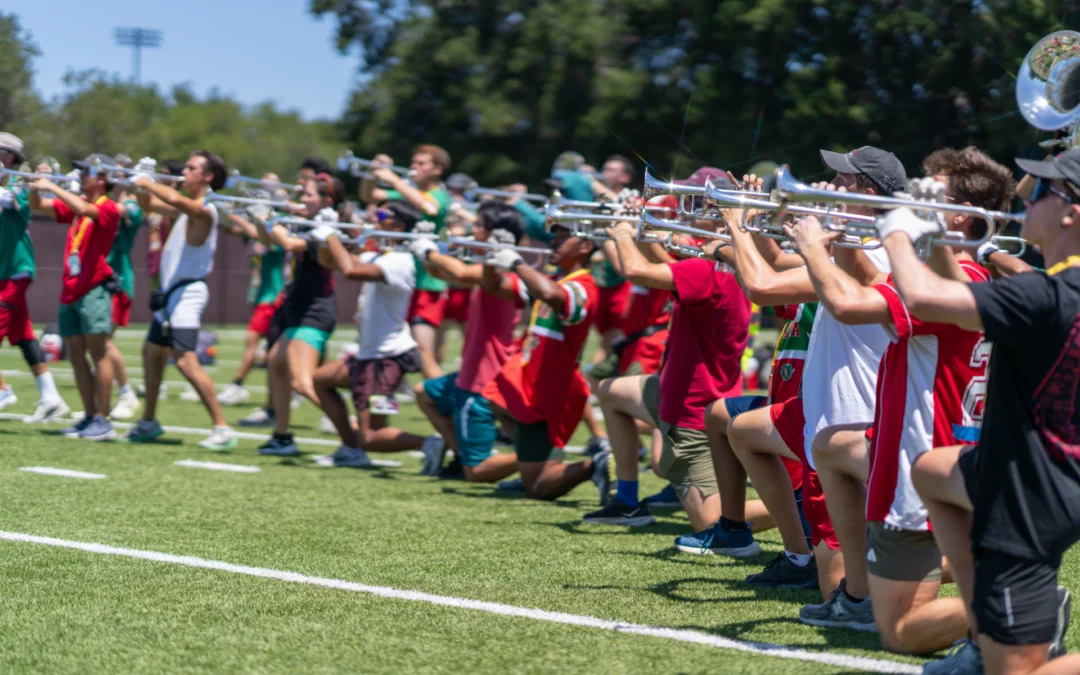
If you’ve ever watched a top-tier marching band show and thought, “How do they keep performing at that level?” — the answer isn’t luck or natural ability. It’s grit.
Psychologist Angela Duckworth defines grit as the combination of passion and perseverance toward long-term goals. For marching bands, grit is what carries students and directors through months of rehearsals, weather setbacks, and competitive pressure.
What Grit Really Means in Marching Band Shows
Duckworth’s work breaks grit into two parts:
- Passion — sustained interest in a long-term goal.
- Perseverance — the drive to keep improving despite obstacles.
Sound familiar? That’s the heartbeat of every great season. From the first downbeat in July to the last show in November, gritty programs thrive not because everything goes right — but because they keep showing up when it doesn’t.
Why Grit Outperforms Talent
Duckworth’s research at the University of Pennsylvania shows that natural talent only gets you so far; consistent effort predicts success more accurately. In marching band shows, that means:
- Students who stick with fundamentals eventually surpass “naturals.”
- Design teams that refine drafts repeatedly end up creating more impactful products.
- Directors who stay calm under pressure lead better when contest results don’t go their way.
Great shows aren’t born; they’re built through relentless iteration — and that’s grit in motion.
For a related look at mindset, read Unleashing Potential: A Growth Mindset for Marching Band Shows.
How to Build Grit in Your Program
1. Model It Yourself
Students mirror your resilience. When you stay composed after a rough run-through, you show them how professionals handle adversity.
2. Set Purpose-Driven Goals
Duckworth notes that grit thrives when goals feel meaningful. Remind students why they’re performing: to move audiences, to grow as musicians, to represent their community.
3. Redefine Success
Shift focus from rankings to progress. Celebrate cleaner phrasing, stronger posture, better ensemble balance. Over time, the consistency pays off — in both performance and morale.
4. Normalize Struggle
Help students understand that frustration means they’re growing. The best marching band shows have rough days built into their journey. The key is learning from them, not avoiding them.
Learn more about resilience in An Olympian’s Playbook for Marching Band Success.
Grit and the Director’s Role
It’s easy to tell students to “push through,” but grit isn’t about grinding endlessly — it’s about sustained, intentional effort.
The best directors balance high standards with empathy. They teach students that growth takes time, and that consistency beats intensity every time. That’s how championship-level marching band shows — and healthy programs — are built.
For more on balancing pressure with purpose, check out The Lasting Impact of Great Music Educators.
FAQs
Why is grit important in marching band shows?
Because marching band is a long-term pursuit. Grit fuels focus and emotional endurance — keeping your ensemble motivated when the excitement fades.
How can I teach grit without burning students out?
Pair challenge with recovery. Push hard during peak rehearsal, but schedule reflection days. Praise effort and perseverance, not just clean performances.
What’s the difference between grit and discipline?
Discipline is daily consistency; grit connects that effort to long-term purpose. Both matter — but grit adds heart to habit.
Can grit be taught to younger students?
Yes. Start small: consistent tone exercises, memorizing short segments, or reflecting on small wins. These early habits lay the foundation for future persistence.
Where can I learn more about grit and education?
- VanDoren Music Blog — resources on leadership, teaching, and show design.
- External: Angela Duckworth’s TED Talk on Grit and her book Grit: The Power of Passion and Perseverance (Scribner).
Evan VanDoren
Composer, educator, and advocate for directors who build resilient, inspired marching band shows.
evanvandoren.com
Recent Comments